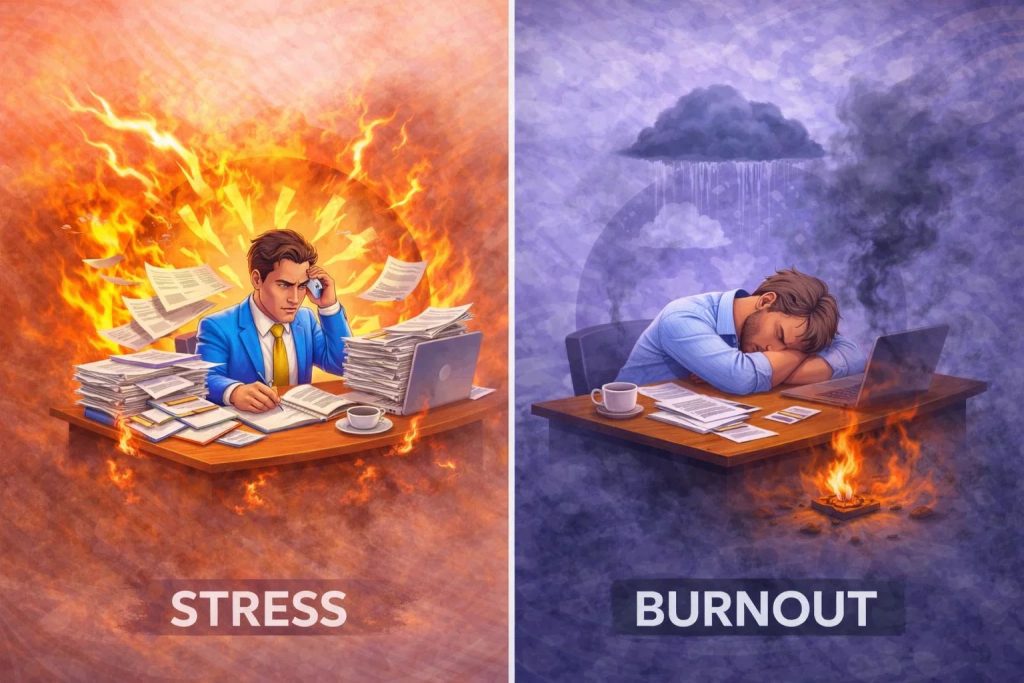
Employee stress and burnout are often discussed interchangeably in workplace conversations. However, they represent different experiences with different implications for organisations. Failing to distinguish between the two can lead to delayed intervention, ineffective wellbeing strategies, and increased risk of disengagement or attrition. Understanding the difference between employee stress vs burnout is essential for organisations aiming to support mental health responsibly and sustainably. It enables leaders and HR teams to respond appropriately, allocate resources effectively, and prevent temporary strain from becoming long-term harm.
Why the Distinction Matters for Organisations
From an organisational perspective, stress and burnout require different responses. Treating burnout as “normal stress” can result in:
- Inadequate support measures
- Overreliance on short-term fixes
- Reduced employee trust
- Escalation of mental health difficulties
Conversely, misinterpreting manageable stress as burnout may lead to unnecessary interventions that do not address underlying organisational issues.
Clear understanding allows organisations to move from reactive wellbeing efforts to targeted, proportionate support.
What Is Employee Stress?
Employee stress refers to the physical and psychological response that occurs when job demands exceed an employee’s perceived capacity to cope. Stress is often situational and may fluctuate depending on workload, deadlines, role clarity, or external pressures.
In moderate amounts, stress can:
- Increase focus and motivation
- Support short-term performance
- Encourage problem-solving
However, when stress becomes chronic, unmanaged, or paired with limited control or support, it increases the risk of mental health difficulties.
Common Sources of Workplace Stress
- Tight deadlines or excessive workload
- Ambiguous role expectations
- Conflicting priorities
- Interpersonal tension or conflict
- Job insecurity or organisational change
Stress often intensifies during periods of transition, restructuring, or sustained high demand.
What Is Burnout?
Burnout is a state of prolonged emotional, mental, and physical exhaustion resulting from sustained workplace stress that has not been adequately addressed. Unlike stress, burnout develops gradually and does not resolve simply through rest or time off.
Burnout is typically characterised by three core features:
- Emotional exhaustion – feeling depleted and unable to recover
- Cynicism or detachment – emotional distancing from work or colleagues
- Reduced sense of effectiveness – feeling that effort no longer leads to meaningful outcomes
Burnout reflects a breakdown in the relationship between the individual and their work environment, rather than a temporary overload.
Key Differences Between Stress and Burnout
Understanding how stress and burnout differ helps organisations choose appropriate responses.
| Employee Stress | Burnout |
| Often temporary | Prolonged and cumulative |
| Fluctuates with workload | Persists regardless of workload changes |
| Employee remains engaged | Emotional withdrawal and detachment |
| Can improve with short-term support | Requires deeper organisational and professional intervention |
| Motivation still present | Motivation significantly reduced |
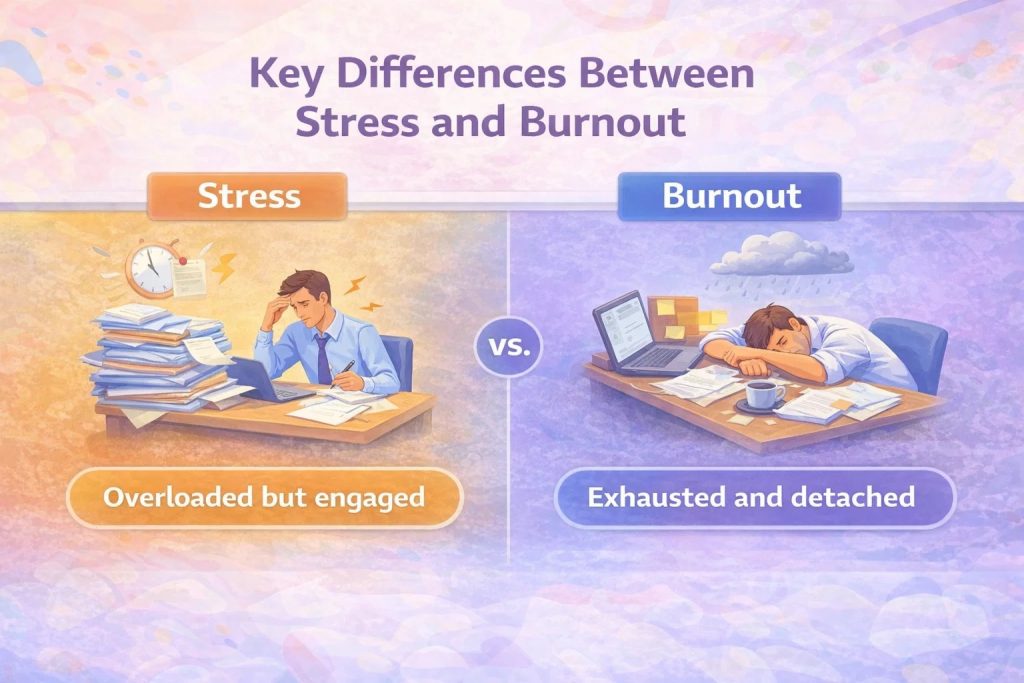
Employees experiencing stress may still feel invested in their work, even if overwhelmed. Employees experiencing burnout often feel disconnected, emotionally drained, and uncertain whether improvement is possible.
How Stress Can Progress Into Burnout
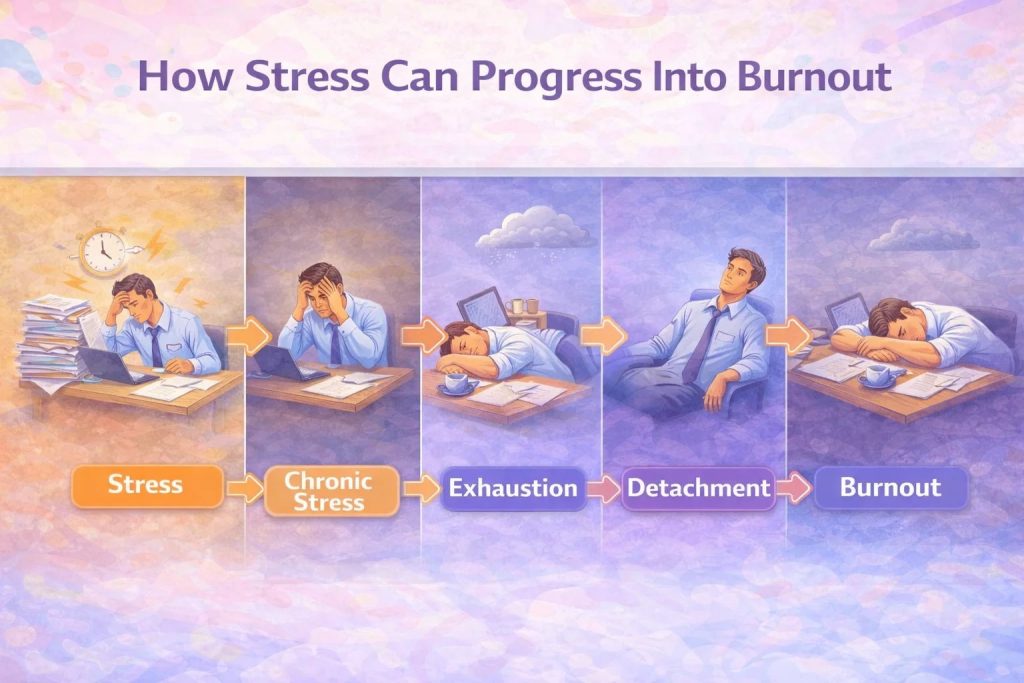
Burnout rarely appears suddenly. It is often the result of repeated cycles of unmanaged stress combined with limited recovery or support.
Common progression patterns include:
- High workload without sufficient recovery
- Ongoing pressure paired with low autonomy
- Emotional labour without adequate support
- Effort not matched by recognition or impact
When stressors persist without meaningful change, employees may shift from “coping under pressure” to emotional disengagement as a protective response.
Recognising this progression early allows organisations to intervene before burnout becomes entrenched.
Organisational Signs of Widespread Stress or Burnout
While individual experiences vary, organisations may notice broader patterns when stress or burnout is present across teams.
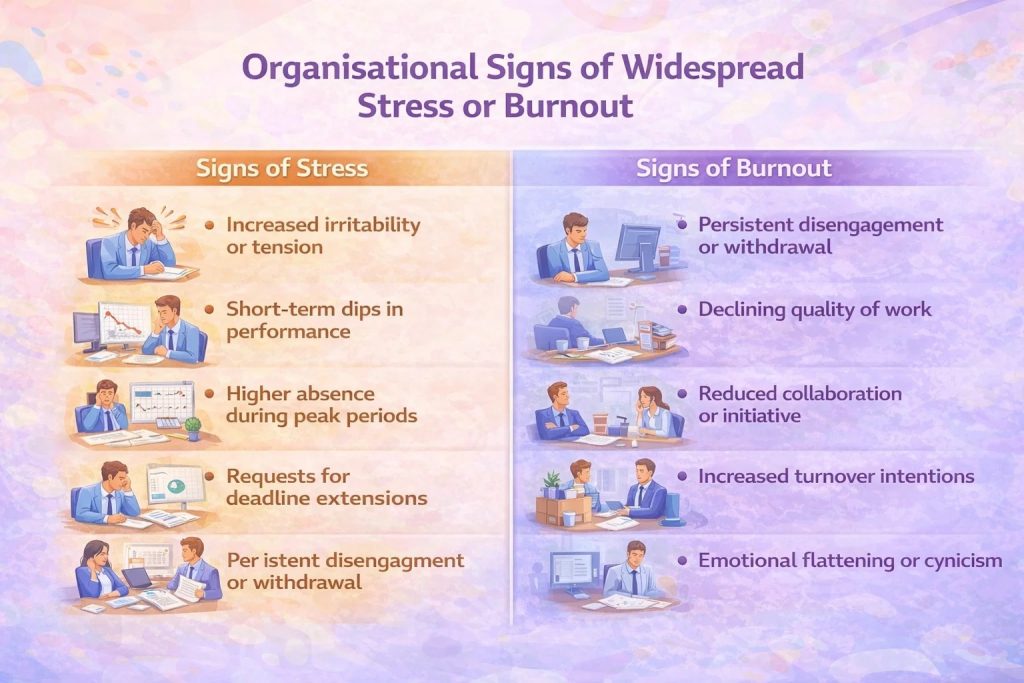
Signs of Predominant Stress
- Increased irritability or tension
- Short-term dips in performance
- Higher absence during peak periods
- Requests for deadline extensions
Signs of Burnout Risk
- Persistent disengagement or withdrawal
- Declining quality of work
- Reduced collaboration or initiative
- Increased turnover intentions
- Emotional flattening or cynicism
At an organisational level, burnout often manifests as cultural fatigue rather than isolated individual distress.
Why Traditional Wellbeing Approaches Often Fall Short
Many organisations attempt to address stress and burnout using generic wellbeing initiatives. While well-intentioned, these approaches may fail to address root causes.
Common challenges include:
- Overemphasis on individual resilience without addressing workload
- One-off workshops without follow-up
- Reliance on EAPs as the primary intervention
- Lack of manager capability in recognising early signs
Without structural and leadership alignment, these efforts may inadvertently place responsibility solely on employees.
For a broader framework, see Workplace Mental Health Support: A Practical Guide for Organisations.
The Role of Leadership and Management
Leaders and managers play a critical role in preventing stress from progressing into burnout. Their influence shapes workload expectations, psychological safety, and help-seeking behaviour.
Effective leadership responses include:
- Normalising conversations about workload and stress
- Monitoring capacity during high-demand periods
- Encouraging realistic prioritisation
- Responding early rather than waiting for crisis
Manager confidence in addressing mental health concerns is a key protective factor for employees.
High-Pressure Roles and Burnout Risk
Employees in high-pressure or high-responsibility roles may be particularly vulnerable to burnout. These roles often involve sustained decision-making, emotional labour, or accountability for outcomes affecting others.
In such contexts:
- Stress may be normalised or minimised
- Help-seeking may be delayed
- Burnout may be misinterpreted as performance issues
Targeted, role-aware mental health support is essential in these environments.
For role-specific considerations, see Mental Health Support for High-Pressure Roles.
When Professional Support May Be Needed
While organisational changes are critical, professional mental health support may be appropriate when:
- Stress persists despite workload adjustments
- Emotional exhaustion is pronounced
- Disengagement or withdrawal increases
- Managers feel unsure how to support effectively
In organisational settings, professional mental health support is most effective when both clinical expertise and an understanding of workplace systems inform it. Providers experienced in working with organisations can help differentiate between situational stress, burnout, and emerging mental health concerns, while supporting leaders and HR teams in responding appropriately.
At CALM International, workplace mental health support is delivered by clinicians who work directly with organisations to provide confidential support and consultative guidance tailored to the organisational context rather than one-size-fits-all interventions.
Moving From Awareness to Action
Understanding the difference between stress and burnout is only the first step. Organisations that respond effectively:
- Address both individual and systemic factors
- Invest in manager capability
- Provide access to appropriate professional support
- Evaluate wellbeing initiatives beyond utilisation metrics
Burnout prevention is not about eliminating all stress. It is about creating environments where stress is manageable, supported, and recoverable.
Supporting Sustainable Performance
Stress and burnout are not signs of individual weakness. They are signals about how work is structured, supported, and led. Organisations that take a thoughtful, informed approach to employee stress and burnout are better positioned to retain skilled employees, maintain engagement during periods of change, and build psychologically safer workplaces.
As a workplace mental health provider working across organisational and cultural contexts, CALM International supports organisations in translating understanding into action — through clinically grounded mental health support that aligns with real workplace demands. Our workplace mental health support integrates clinical expertise with organisational insight — helping leaders differentiate stress from burnout and implement proportionate, sustainable interventions.
Learn more about our workplace mental health services →