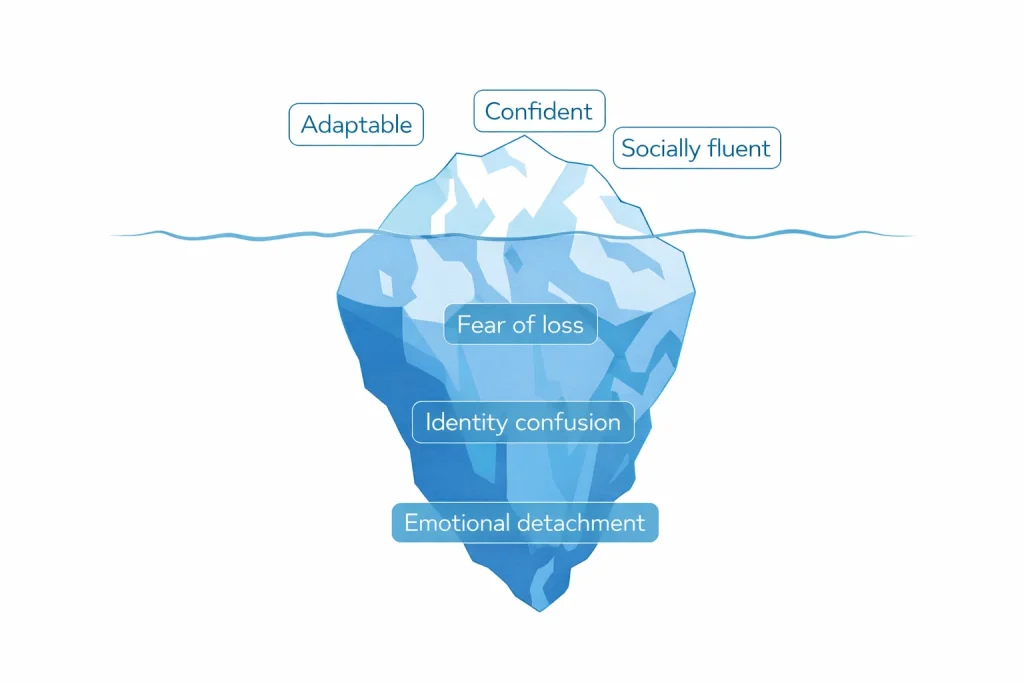
Third Culture Kids are frequently described as adaptable, globally minded, and culturally aware. While these strengths are real, they sometimes mask the quieter emotional realities of growing up between places, communities, and identities.
In international schools, where frequent transitions are common, third culture students may represent a large portion of the student population. Yet their emotional experiences are often simplified as resilience or adaptability. In reality, repeated transitions, identity ambiguity, and disrupted peer networks can create cumulative psychological strain—even among students who appear highly capable.
Understanding the emotional wellbeing of Third Culture Kids therefore requires more than celebrating the advantages of international upbringing without recognising its psychological complexity. It requires both psychological insight and institutional awareness informed by practitioners working directly with internationally mobile student populations.
For a broader systems overview, see: Mental Health Support in International Schools: A Practical Guide.
Who Are Third Culture Kids?
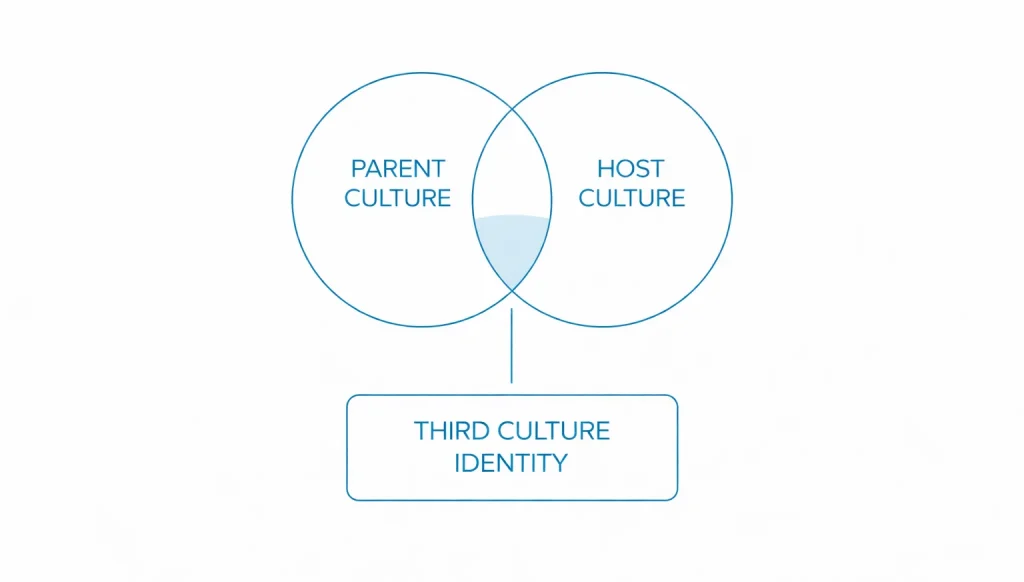
The term “Third Culture Kid” refers to children who spend a significant part of their developmental years outside their parents’ culture. Rather than fully identifying with their passport country or host country, they often develop a blended or “third” cultural identity.
Key characteristics of TCK experiences include:
- Multiple relocations during formative years
- Exposure to diverse languages and cultures
- Cross-cultural social environments
- Repeated disruption of peer networks
- Ambiguous sense of home or belonging
While many Third Culture Kids demonstrate flexibility and global competence, these strengths often coexist with invisible stressors.
Identity Development and Belonging Strain
Adolescence is a critical period for identity formation. For many Third Culture Kids, this process can feel especially complex. Students may be navigating questions of belonging while simultaneously adapting to new schools, new peer groups, and sometimes entirely new cultural environments.
Common identity-related challenges include:
1. Cultural Ambiguity
Students may feel “not fully” from any one culture. Questions like “Where are you from?” can trigger confusion rather than clarity.
2. Fragmented Belonging
Repeated relocation can disrupt attachment to communities. Third Culture Kids may learn to emotionally detach in anticipation of future moves.
3. Surface Adaptability vs Internal Dislocation
High adaptability can mask deeper uncertainty. Students may appear socially competent while privately struggling with belonging or identity coherence.
Without structured support, these patterns may contribute to:
- Low-grade anxiety
- Social withdrawal
- Emotional suppression
- Difficulty forming stable peer attachments
The Psychological Impact of Repeated Transitions
Transition is central to the Third Culture Kid experience. Yet every relocation—no matter how exciting the destination—also involves a series of losses. Friends who were once part of daily life disappear into different time zones, familiar teachers are replaced, and routines that once felt stable suddenly change.
Loss may include:
- Close friendships
- Familiar teachers
- Cultural familiarity
- Language fluency
- Routine and predictability
When transitions occur repeatedly without adequate processing, cumulative grief may develop.
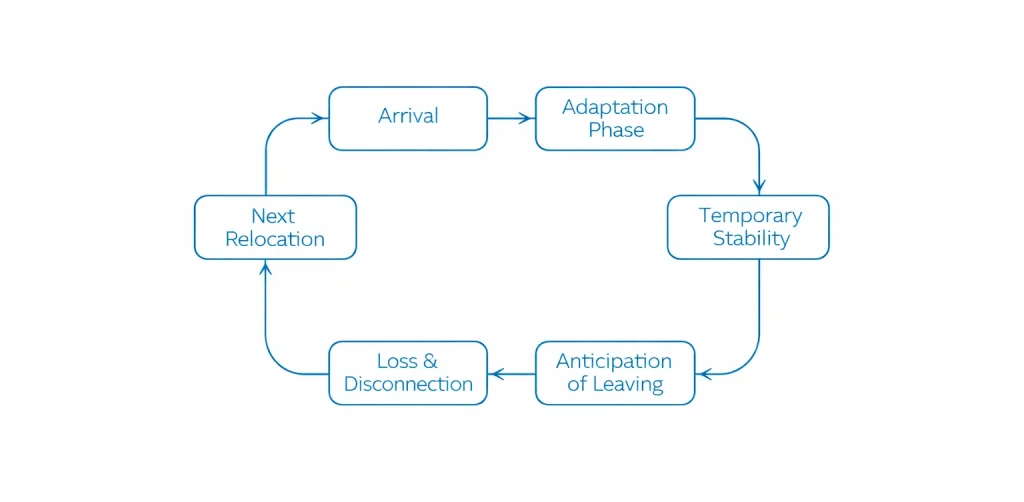
In international schools, transition cycles can be normalised. Yet what is routine institutionally may be destabilising developmentally.
Schools that treat transition as an administrative process rather than an emotional one risk overlooking this cumulative impact.
Emotional Patterns Often Seen in TCK Students
Not all Third Culture Kids experience distress. Many thrive in internationally mobile environments and develop impressive adaptability and cultural awareness. However, counsellors and educators working in international schools often notice recurring emotional patterns among students navigating repeated transitions:
- Difficulty committing deeply to friendships
- Fear of future loss
- Heightened sensitivity to peer rejection
- Perfectionism linked to identity validation
- Overachievement as stability-seeking
- Emotional guardedness
Importantly, these patterns do not necessarily indicate disorder. They signal the need for awareness and supportive systems.
Academic Context and Third Culture Kid Stress
TCK identity strain can intersect with academic pressure.
In high-performing international curricula (IB, IGCSE, AP), students may experience:
- Pressure to validate relocation investment
- Parental expectation linked to international relocation
- Performance as a source of identity stability
Academic stress may amplify emotional vulnerability, particularly when belonging feels uncertain.
When Emotional Strain Escalates
Schools are encouraged to remain attentive to signs that normal adjustment may be shifting into sustained distress.
Warning indicators may include:
- Persistent social withdrawal
- Mood changes lasting several weeks
- Declining academic engagement
- Sleep disturbances
- Expressions of hopelessness
- Risk-taking behaviours
Early identification is protective. In cases where distress begins to affect daily functioning, schools and families may consider structured psychological support, including specialised child and adolescent counselling tailored to internationally mobile students.
In more complex cases, schools may need to activate safeguarding or referral pathways.
How International Schools Can Support TCK Emotional Wellbeing
Effective support requires institutional design, not reactive counselling alone. Many international schools implement structured, system-level approaches through comprehensive school wellbeing programmes that integrate safeguarding, early identification, and ongoing mental health support.
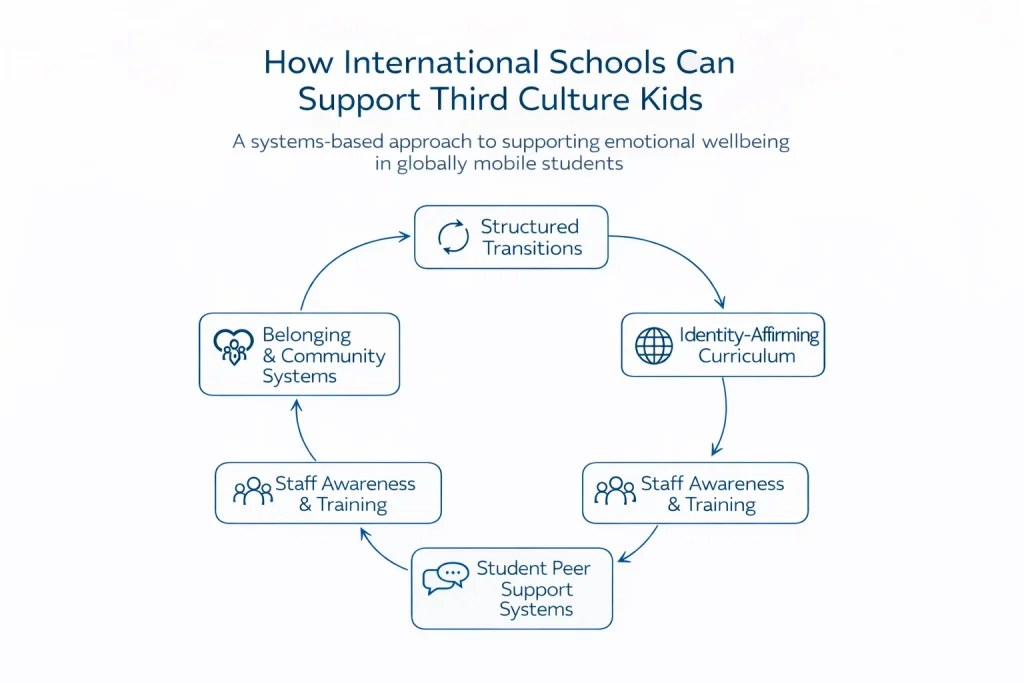
1. Structured Transition Programmes
- Pre-arrival orientation
- Peer buddy systems
- Cultural adaptation workshops
- Exit transition processing for departing students
Transition should be treated as both logistical and emotional.
2. Identity-Affirming Curriculum
Schools can integrate:
- Global identity discussions
- Cross-cultural storytelling
- Reflection spaces within advisory programmes
Normalising complex identity reduces internal confusion.
3. Staff Training
Teachers and pastoral staff should understand:
- Transition-related grief patterns
- Cultural identity strain
- Surface adaptability masking distress
Early awareness reduces misinterpretation of behaviours.
4. Psychological Safety and Belonging Initiatives
Belonging reduces vulnerability.
Schools can promote:
- Stable advisory groups
- Mixed-grade mentorship
- Inclusive extracurricular design
Belonging is protective against anxiety and disengagement.
5. Access to Professional Mental Health Support
In cases where:
- Identity strain becomes persistent distress
- Anxiety interferes with functioning
- Repeated relocation leads to depressive symptoms
Professional clinical support may be appropriate.
Effective support in international school contexts requires practitioners who understand:
Relocation cycles and transition-related loss
Cross-cultural identity formation
Safeguarding considerations within school environments
Support should be context-aware; not culturally blind.
CALM International provides structured student assessment, confidential therapeutic support, and consultative guidance to international schools navigating complex transition and identity-related concerns.
Stress vs Emerging Mental Health Concerns in Third Culture Kids
It is important to distinguish between:
Normal adjustment stress
- Temporary sadness after relocation
- Initial social anxiety
- Short-term academic disruption
and
Emerging mental health concerns
- Prolonged mood disturbance
- Functional impairment
- Social isolation beyond adjustment phase
- Risk-taking behaviours
Institutional systems must support proportionate response.
A Systems Lens: Moving Beyond Individual Resilience
International schools sometimes overemphasise student resilience.
While adaptability is a strength, institutional responsibility remains critical.
Effective mental health support for Third Culture Kids includes:
- Predictable routines
- Clear communication during school transitions
- Academic pacing sensitivity
- Defined referral pathways
Resilience should be supported—not assumed.
Conclusion
Third Culture Kids bring immense strengths to international schools. Their global perspective, adaptability, and cross-cultural awareness enrich school communities in meaningful ways.
At the same time, growing up between cultures can carry emotional complexity that is not always visible. Students who appear confident and adaptable may still be navigating questions of identity, belonging, and stability beneath the surface.
When international schools recognise these dynamics and respond with intentional systems—structured transitions, belonging initiatives, and culturally informed mental health support—they create environments where globally mobile students can genuinely thrive.
Supporting TCK wellbeing is not simply about helping students cope with change. It is about ensuring that transition does not come at the cost of emotional grounding and identity development.
As part of a broader international school mental health framework, CALM International works alongside school leaders and safeguarding teams to strengthen systems supporting globally mobile students — ensuring that adaptability does not mask unmet emotional needs.