Academic stress is one of the most common challenges affecting students today. Homework demands, exams, expectations to perform, and competitive school environments can place significant pressure on children and adolescents as they progress through their education. While some academic pressure can be motivating, ongoing or excessive stress related to schoolwork can negatively affect a student’s mental health, emotional wellbeing, and confidence. Understanding academic stress in students helps parents and educators recognise when school pressure may be doing more harm than good.
Academic Stress in Students: Key Signs to Watch
→ Persistent worry about grades
→ Avoidance of homework or exams
→ Emotional exhaustion or irritability
→ Physical complaints during school days
What Is Academic Stress?
Academic stress refers to the strain students experience when they feel overwhelmed by school-related demands. This may include expectations around grades, assessments, workload, or performance comparisons with peers.
Students experiencing academic stress often feel that their ability to meet expectations is under constant evaluation. Over time, this pressure can lead to emotional distress, avoidance behaviours, and reduced engagement with learning.
Academic stress can affect students at any age, but it often becomes more pronounced during key academic transitions or examination periods.
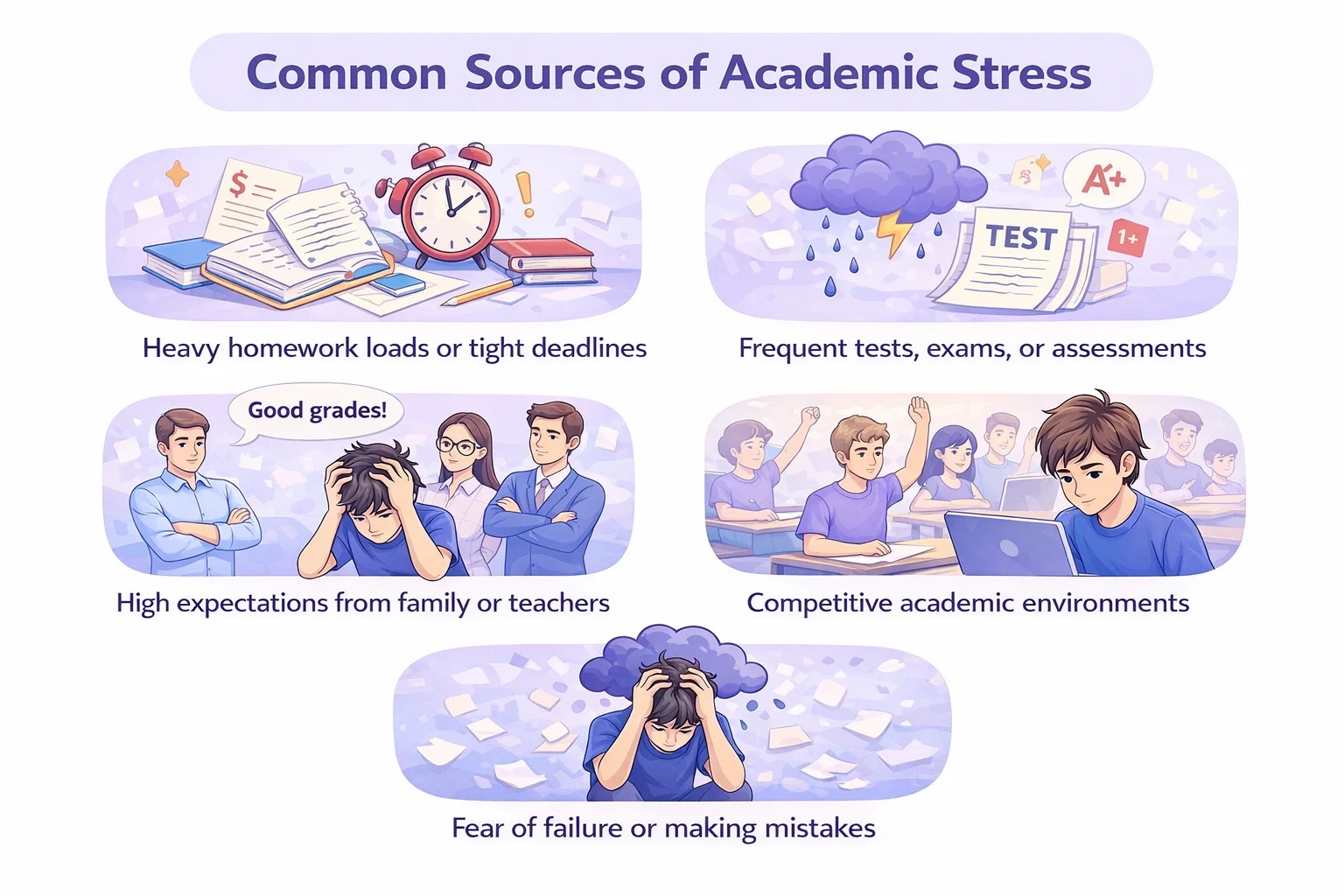
Common Sources of Academic Stress
Academic stress may arise from a range of factors, including:
- Heavy homework loads or tight deadlines
- Frequent tests, exams, or assessments
- High expectations from family or teachers
- Competitive academic environments
- Fear of failure or making mistakes
For some students, academic stress is intensified by perfectionism or a strong desire to meet external expectations. Others may struggle when academic demands exceed their current coping skills or learning needs.
How Academic Stress Affects Student Mental Health
When academic stress is persistent, it can begin to affect a student’s mental health in several ways.
Students may experience:
- Increased anxiety related to schoolwork or exams
- Reduced self-esteem or confidence
- Difficulty concentrating or retaining information
- Avoidance of homework or school tasks
- Emotional exhaustion or irritability
Over time, academic stress may contribute to broader mental health concerns, particularly when students feel unsupported or unable to meet expectations despite effort.
Signs a Student May Be Struggling with Academic Stress
Academic stress does not always present as obvious distress. Some common warning signs include:
Emotional Signs
- Excessive worry about grades or performance
- Fear of disappointing others
- Increased frustration or emotional sensitivity
Behavioural Signs
- Procrastination or avoidance of schoolwork
- Perfectionism or fear of making mistakes
- Withdrawal from activities once enjoyed
Physical Signs
- Headaches or stomach aches during school days
- Changes in sleep patterns
- Fatigue during the school term
When these signs persist, academic stress may be affecting a student’s overall wellbeing.
Academic Stress and Self-Worth
For some students, academic performance becomes closely tied to self-worth. When success is seen as the primary measure of value, setbacks or mistakes can feel deeply distressing.
This pattern may increase vulnerability to anxiety, burnout, or disengagement from learning. Helping students separate self-worth from academic outcomes is an important protective factor for mental health.
Supporting Students Experiencing Academic Stress
Early support can reduce the negative impact of academic stress. Helpful approaches may include:
- Setting realistic expectations
- Encouraging balanced routines
- Supporting effective study habits
- Promoting open communication about stress
Collaboration between parents and schools plays a key role in identifying stressors and adjusting demands where appropriate. Classroom-based stress relief activities can also help students manage ongoing academic pressure in a supportive school environment.
For a broader understanding of how stress affects students beyond academics, see our Student Stress & Mental Health guide.
When to Seek Additional Support
If academic stress begins to interfere with emotional wellbeing, learning, or daily functioning, additional support may be helpful. Professional guidance can help clarify whether a student needs short-term strategies or more structured mental health support.
At CALM International, our clinicians work with students, families, and schools to understand the underlying factors contributing to academic stress and to guide appropriate next steps. Parents and caregivers who are concerned about a child’s wellbeing may book a consultation with one of our clinicians to explore tailored support options.