Exam stress is one of the most common mental health challenges affecting students in international schools. While some academic pressure can motivate students to prepare and perform well, excessive exam anxiety can interfere with sleep, concentration, emotional wellbeing, and academic functioning.
Students in international school environments often face additional pressures, including highly competitive academic expectations, university admissions concerns, multilingual learning environments, relocation stress, and family expectations shaped by different cultural backgrounds.
This guide explores the signs of unhealthy exam stress, practical coping strategies for students, and how parents can support children during high-pressure academic periods.
Signs of Exam Stress in International School Students
Exam stress does not always announce itself clearly. Students may not say they are stressed. Some do not recognise it themselves. It tends to show up in behaviour before it shows up in words.
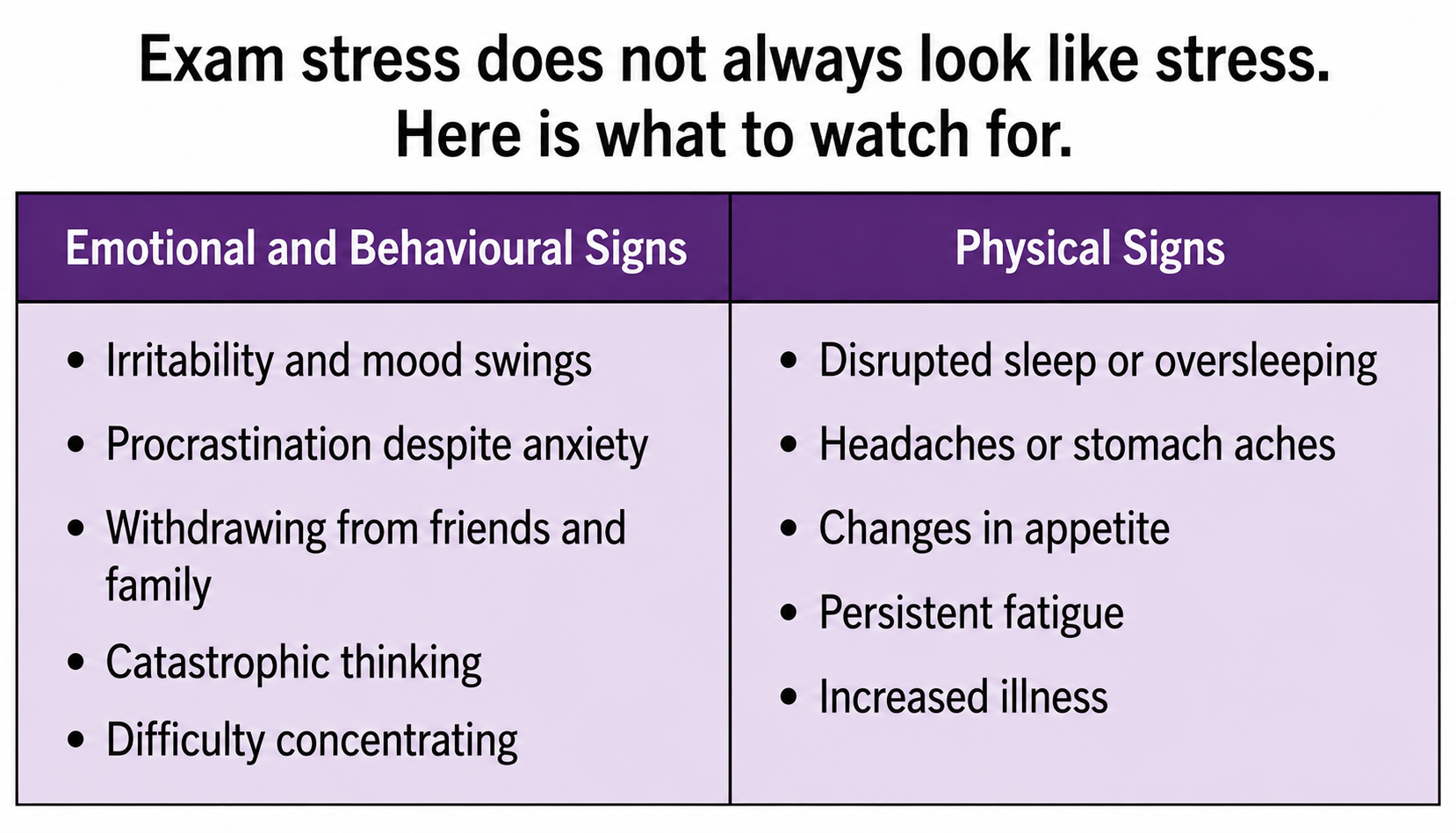
Common signs in students include:
- Difficulty sleeping or sleeping significantly more than usual
- Increased irritability, emotional sensitivity, or mood swings
- Procrastinating on revision despite feeling anxious about exams
- Physical complaints such as headaches, stomach aches, or fatigue
- Loss of appetite or changes in eating patterns
- Withdrawing from friends, family, or activities they usually enjoy
- Catastrophic thinking, such as believing they will fail regardless of preparation
For students in international schools, there are additional layers. Some students are sitting exams in a second or third language. Others are preparing for examinations in a curriculum they joined mid-way through. Many are doing all of this while also navigating the social complexity of a highly mobile peer group and family pressure from parents who may have high academic expectations shaped by their own educational backgrounds.
How Students Can Manage Exam Stress Effectively
Build a Realistic Revision Plan
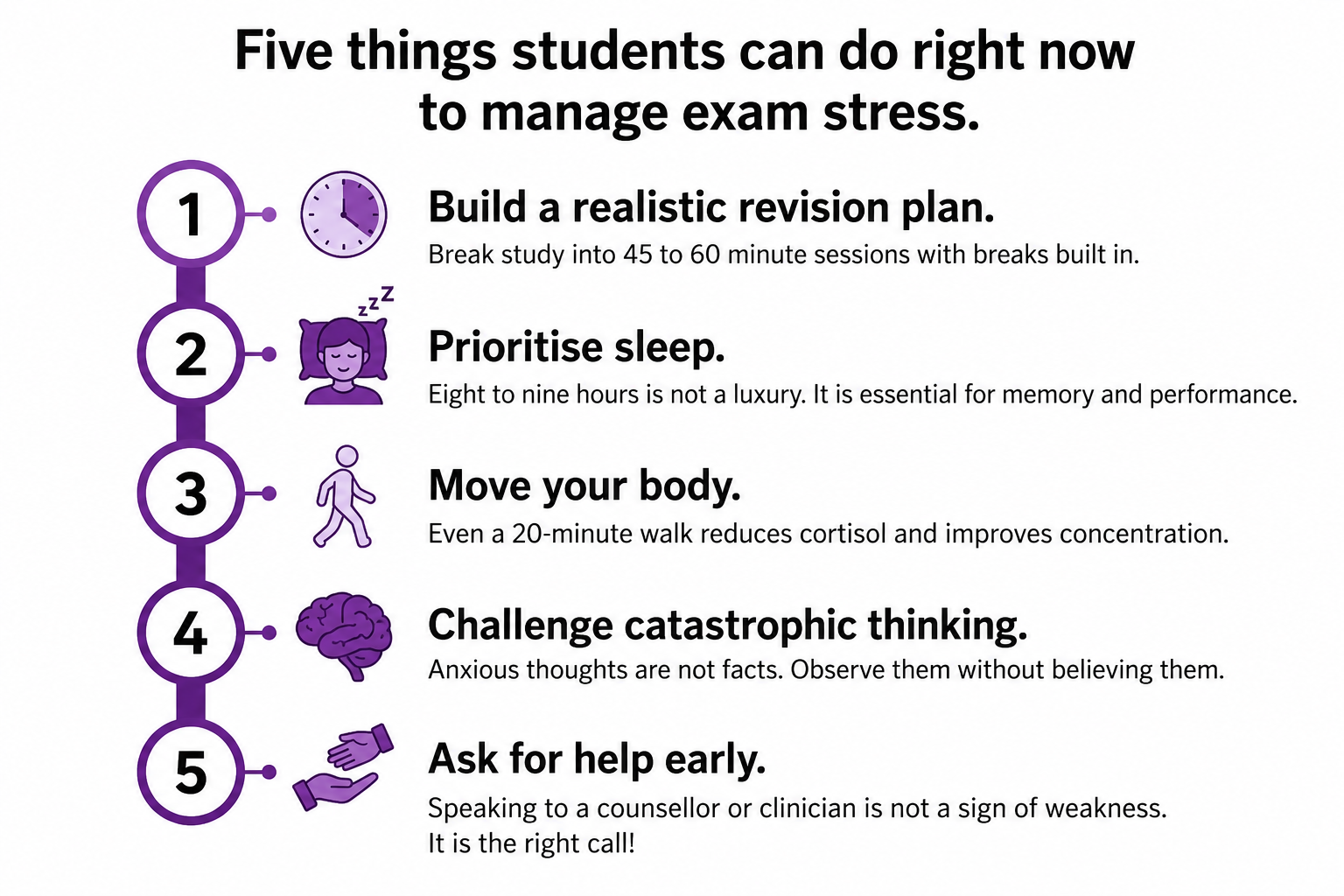
One of the most effective things a student can do to reduce exam anxiety is to feel in control of their preparation. A revision plan does not eliminate stress, but it replaces the vague, generalised dread of not knowing where to start with a concrete set of daily actions. The plan should be realistic, not aspirational. Scheduling ten hours of revision a day and then failing to stick to it produces more anxiety, not less.
Breaking revision into manageable sessions of 45 to 60 minutes, with short breaks built in, tends to produce better retention and lower stress than long, uninterrupted blocks. The Pomodoro technique, 25 minutes of focused work followed by a five-minute break, is a well-evidenced approach that many students find helpful.
Prioritise Sleep Above Almost Everything Else
Sleep is not a reward to be earned after revision. It is a biological requirement for memory consolidation, cognitive function, and emotional regulation. Students who consistently sacrifice sleep to study more are not gaining an advantage. Research consistently shows that sleep-deprived students perform worse in exams than those who are adequately rested, even when the sleep-deprived student studied longer.
In the lead-up to exams, students should aim for eight to nine hours of sleep, maintain a consistent bedtime, and avoid screens for at least an hour before sleeping. Pulling all-nighters the night before an exam is one of the least effective revision strategies available, despite being one of the most common.
Move Their Body
Physical activity is one of the most reliable and immediate stress relievers available, and it costs nothing. Even a 20-minute walk reduces cortisol levels and improves mood. Students who build regular movement into their exam preparation, whether that is a daily walk, a gym session, or a sport they enjoy, consistently report lower anxiety and better concentration than those who remain sedentary throughout revision periods.
Exercise does not need to be intense or time-consuming to be effective. The key is regularity rather than duration.
Manage the Inner Critic
For many students, the most damaging source of exam stress is not the exam itself but the internal commentary running alongside preparation. Thoughts like I am going to fail, I am not smart enough, or everyone else is better prepared than me are extremely common during exam periods, and they are almost never accurate reflections of reality.
Cognitive techniques such as challenging the evidence for catastrophic thoughts, reframing failure as information rather than identity, and practising self-compassion in the face of mistakes have strong research support for reducing exam anxiety. Students who can observe their anxious thoughts without immediately believing them tend to be significantly more resilient under pressure.
Know When to Ask for Help
If exam stress is beginning to affect a student’s sleep, emotional wellbeing, physical health, relationships, or ability to cope day-to-day, it may be a sign that additional support is needed. Understanding when student stress requires professional support can help parents and schools intervene early before difficulties become more serious.
How Parents Can Support Children During Exam Stress
Regulate Your Own Anxiety First
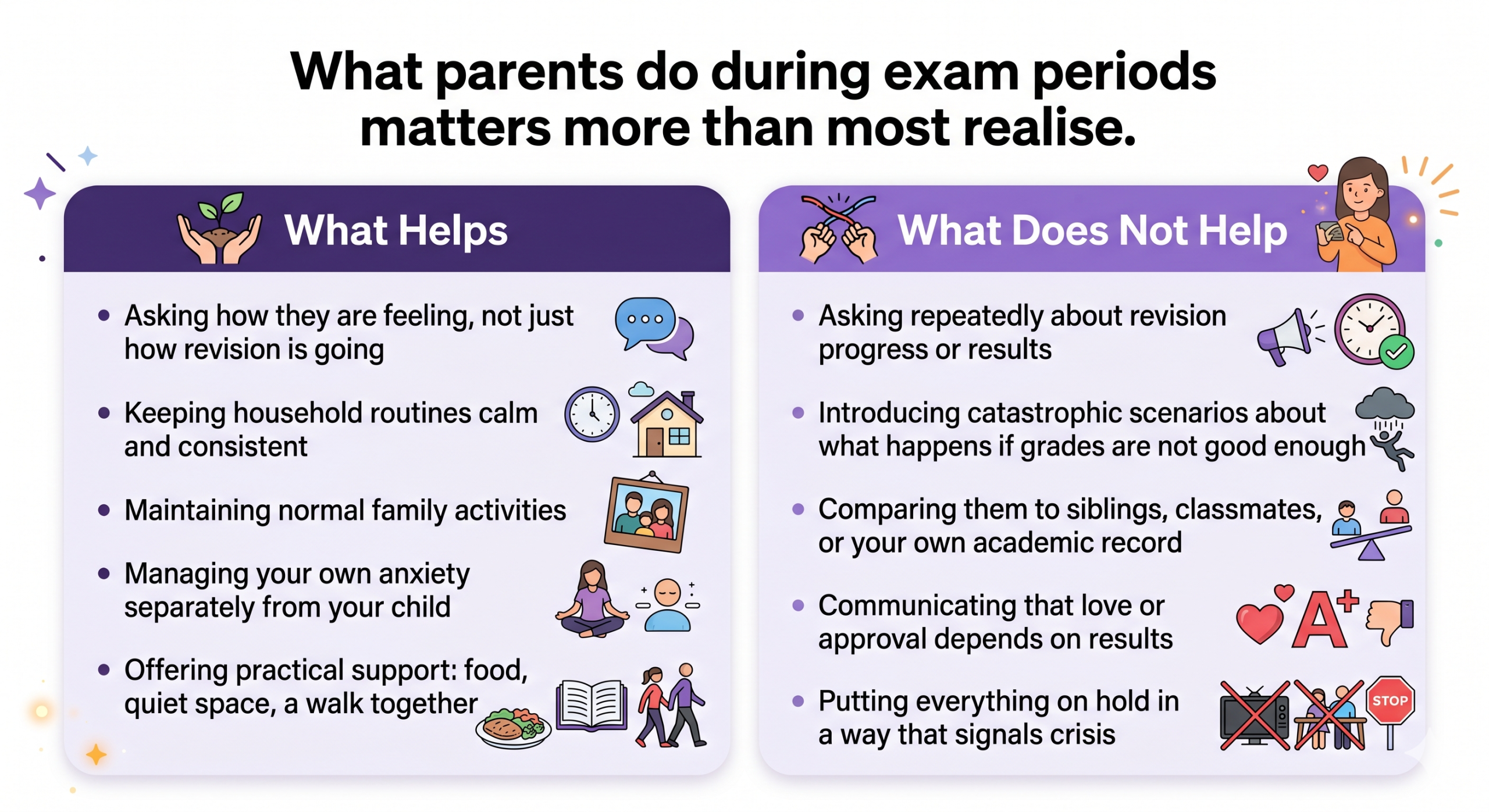
Parents of students approaching major exams often experience significant anxiety themselves, and that anxiety is contagious. A parent who is visibly worried about results, who asks repeatedly about revision progress, or who introduces catastrophic scenarios about what will happen if results are not good enough, is adding to their child’s stress load, not reducing it.
This does not mean parents should pretend not to care. It means being aware of how parental anxiety is being communicated, and making a conscious effort to manage it separately from the relationship with the child. Talking to a partner, a friend, or a professional about exam-related worries rather than to the student is a concrete and useful step.
Create Calm at Home
Home environment during exam periods matters enormously. A household that is tense, conflict-filled, or preoccupied with results adds to the pressure a student is already carrying. Conversely, a home that feels stable, predictable, and low-drama provides a genuine recovery space that supports both wellbeing and performance.
Practical steps include keeping household routines consistent, reducing unnecessary conflict during the exam period, ensuring the student has a quiet space to study, and maintaining normal family activities rather than putting everything on hold in a way that signals a crisis.
Ask About the Student, Not Just the Exam
The most common parental communication pattern during exam periods is asking how revision is going, how prepared the student feels, and what they think will happen in the exam. These questions are understandable, but they consistently centre the exam rather than the student.
Questions that focus on how the student is doing, whether they are sleeping okay, whether they are getting outside, whether there is anything they need, tend to be received very differently. They communicate that the parent’s primary concern is the child’s wellbeing, not the result. That signal matters, especially for students who are already putting significant pressure on themselves.
Avoid Comparison and Result-Focused Pressure
Comparing a student to siblings, classmates, or the parent’s own academic history is one of the most reliably damaging things a parent can do during exam periods. It does not motivate. It increases shame, reduces confidence, and damages the parent-child relationship at a moment when that relationship is a primary source of support.
Similarly, communicating explicitly or implicitly that love, approval, or family standing is contingent on exam results is associated with significantly higher rates of anxiety, avoidance, and, in serious cases, mental health crises during exam periods. Outcomes matter, but they matter far less than the wellbeing of the person sitting the exam.
When Additional Support May Help
If exam stress is beginning to affect your child’s emotional wellbeing, sleep, school functioning, or confidence, professional support can help students develop healthier coping strategies and reduce anxiety during high-pressure academic periods.
CALM International offers counselling and mental health support for students, parents, and international school communities.