Feeling nervous about school from time to time is normal for children and teenagers. New classes, unfamiliar teachers, social changes, and academic demands can all cause temporary worry. However, when fear or distress around school becomes persistent, intense, or begins to interfere with daily life, it may signal school-related anxiety. Understanding school anxiety in children and teens helps parents and educators recognise early warning signs and respond before anxiety begins to affect emotional wellbeing, learning, or long-term mental health.
Early Signs of School Anxiety
→ Persistent fear or distress before school
→ School refusal or frequent requests to stay home
→ Physical complaints on school days
→ Emotional distress that does not ease with reassurance
What Is School Anxiety?
School anxiety refers to persistent fear, distress, or avoidance related to school or school-related situations. It may centre around academic performance, social interactions, separation from caregivers, or the school environment itself.
Unlike short-term nervousness, school anxiety tends to:
- Occur repeatedly or daily
- Intensify before school days
- Persist even when practical problems appear resolved
School anxiety can affect children of all ages and may look different depending on developmental stage, personality, and individual stressors.
Common Causes of School Anxiety in Children and Teens
School anxiety rarely has a single cause. It often develops through a combination of emotional, academic, and environmental factors.
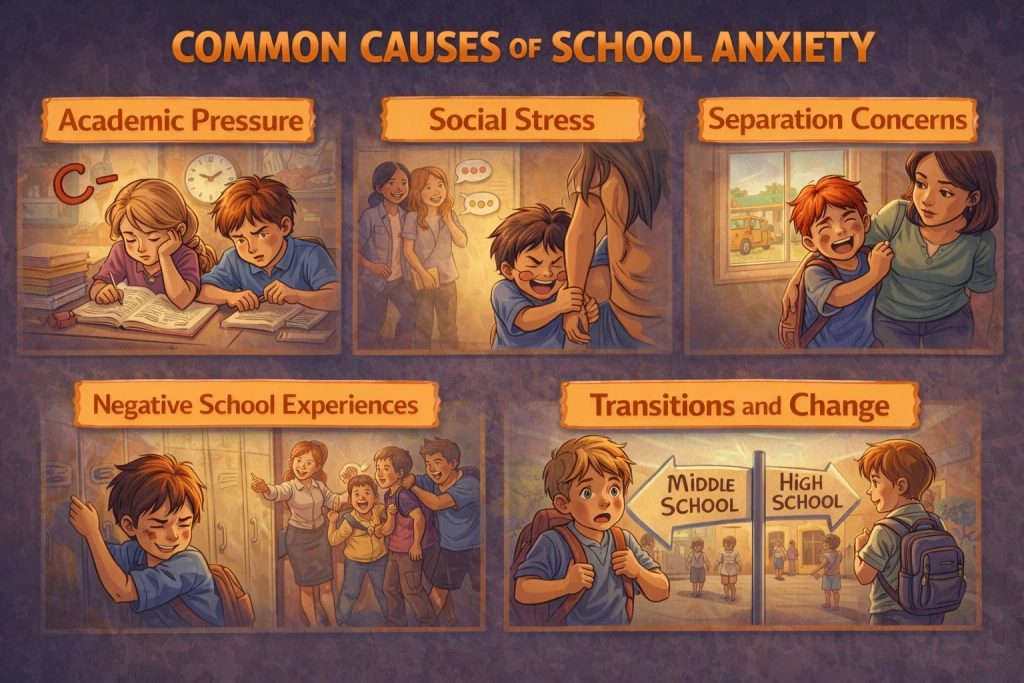
Academic Pressure
Fear of failure, falling behind, or disappointing adults can trigger anxiety, particularly in high-expectation or competitive school environments. Ongoing academic demands can contribute to anxiety, particularly when school pressure becomes persistent or overwhelming, as seen in academic stress in students.
Social Stress
Friendship difficulties, peer conflict, bullying, or fear of social judgement are common contributors to school anxiety, especially in older children and adolescents.
Separation Concerns
Younger children may experience anxiety linked to separation from caregivers, particularly after transitions such as starting school, changing schools, or following disruptions to routine.
Negative School Experiences
Past experiences such as academic struggles, disciplinary incidents, or embarrassment in class can make school feel unsafe or threatening over time.
Transitions and Change
Starting a new school year, moving countries, or transitioning between educational stages can increase anxiety, particularly for students who thrive on predictability.
Early Signs of School Anxiety in Children and Teens
School anxiety does not always present as obvious fear. Many children and teens struggle silently, which is why early signs are often overlooked.

Emotional Signs
- Excessive worry about school or school performance
- Tearfulness or emotional distress before school
- Irritability or mood changes on school days
- Expressing fear, dread, or panic related to school
Behavioural Signs
- Refusal or reluctance to attend school
- Frequent requests to stay home
- Avoidance of schoolwork or school activities
- Withdrawal from peers or extracurricular interests
Physical Signs
- Stomach aches, headaches, or nausea before school
- Fatigue or sleep disturbances during school terms
- Frequent visits to the school nurse
When physical symptoms repeatedly occur on school days but ease during weekends or holidays, anxiety may be playing a role.
How Is School Anxiety Different From Normal School Stress?
It is important to distinguish between normal school stress and anxiety.
- Normal stress tends to be temporary and situation-specific (e.g. before a test or presentation).
- School anxiety is more persistent and often disproportionate to the situation, continuing even when reassurance or practical solutions are offered.
If distress escalates rather than resolves over time, further support may be needed.
For a broader overview of how stress affects students, see our guide on Student Stress & Mental Health.
How School Anxiety Affects Mental Health and Learning
When school anxiety is left unaddressed, it can begin to affect multiple areas of a student’s life, including:
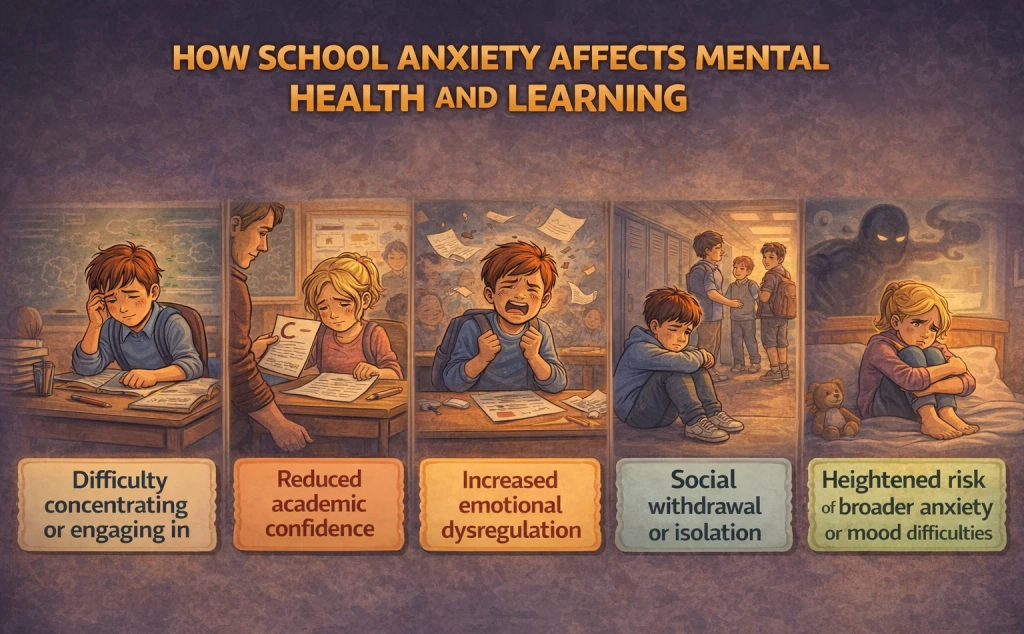
- Difficulty concentrating or engaging in learning
- Reduced academic confidence
- Increased emotional dysregulation
- Social withdrawal or isolation
- Heightened risk of broader anxiety or mood difficulties
Over time, avoidance behaviours may reinforce anxiety, making school attendance and participation increasingly challenging.
How Parents and Schools Can Respond Early
Early support can significantly reduce the impact of school anxiety. Helpful responses may include:
- Listening calmly and validating the child’s feelings
- Avoiding dismissal or minimisation of distress
- Maintaining consistent routines
- Collaborating with teachers or school counsellors
- Gradually supporting school attendance rather than avoidance
Addressing anxiety early helps prevent patterns from becoming entrenched.
For practical, school-based strategies, teachers may also find value in classroom-based stress relief activities that support emotional regulation and reduce anxiety in everyday learning environments.
When School Anxiety May Require Professional Support
Professional support may be helpful when:
- Anxiety persists for several weeks or months
- School refusal or avoidance increases
- Emotional distress interferes with learning or relationships
- Physical symptoms are frequent and unexplained
- Parents or educators feel unsure how to help
Mental health screenings or counselling can help clarify whether anxiety is situational or part of a broader mental health concern, and guide appropriate next steps. At CALM International, our clinicians work with children, teens, families, and schools to understand the factors contributing to school anxiety and provide developmentally appropriate support.
If you are concerned about a child or teen experiencing school anxiety — or know someone who may need support — we encourage you to get in touch with us today to discuss appropriate next steps.
Supporting Children and Teens Through School Anxiety
School anxiety is more common than many parents realise — and it is treatable. With early recognition, understanding, and collaborative support between families and schools, children and teens can regain confidence, rebuild coping skills, and feel safer engaging with school life.
Recognising early signs of school anxiety in children and teens is a crucial first step in protecting both academic progress and long-term emotional wellbeing.
Frequently Asked Questions (FAQs)
What is school anxiety in children and teens?
School anxiety refers to persistent fear, distress, or avoidance related to school or school-related situations. Unlike temporary nervousness, it tends to occur repeatedly and can interfere with a child or teen’s emotional wellbeing, learning, or daily functioning.
What causes school anxiety?
School anxiety often develops from a combination of factors, including academic pressure, social stress or bullying, separation concerns, negative school experiences, and major transitions such as starting a new school or moving countries.
What are the early signs of school anxiety?
Early signs may include excessive worry about school, tearfulness before school days, reluctance or refusal to attend school, avoidance of schoolwork, withdrawal from peers, and physical symptoms such as headaches, stomach aches, or nausea that occur mainly on school days.
How is school anxiety different from normal school stress?
Normal school stress is usually short-term and situation-specific, such as before a test or presentation. School anxiety is more persistent, often disproportionate to the situation, and continues even when reassurance or practical solutions are offered.
Can school anxiety affect learning and mental health?
Yes. When left unaddressed, school anxiety can affect concentration, academic confidence, emotional regulation, and social relationships. Over time, it may increase the risk of broader anxiety or mood difficulties.
How can parents and schools support children with school anxiety?
Support may include listening calmly, validating the child’s feelings, maintaining consistent routines, collaborating with teachers or school counsellors, and gradually encouraging school attendance rather than avoidance.
When should professional support be considered for school anxiety?
Professional support may be helpful when anxiety persists for several weeks or months, school avoidance increases, physical symptoms are frequent, or emotional distress interferes with learning or relationships. At CALM International, clinicians work with children, teens, families, and schools to help clarify concerns and guide appropriate next steps.