
Mental health support in international schools requires a distinct approach. Unlike domestic school systems, international schools serve highly transient, culturally diverse student populations navigating identity development, academic pressure, and cross-cultural transitions simultaneously.
While awareness of student wellbeing has increased, many international schools continue to face challenges translating good intentions into structured, sustainable mental health systems.
Effective mental health support in international schools often requires moving beyond ad hoc counselling and reactive crisis management. Instead, schools benefit from a coherent framework that integrates safeguarding, early identification, referral pathways, cultural sensitivity, and academic context.
This guide outlines key considerations for school leaders, safeguarding teams, and boards as they navigate these issues.
Drawing on clinical experience working directly with international schools across Asia and globally mobile communities, CALM International has observed recurring structural patterns that influence student mental health. The insights in this guide reflect both clinical practice and institutional collaboration with school leadership teams addressing safeguarding, academic pressure, and cross-cultural complexity.
Why Mental Health Support in International Schools Is Structurally Different
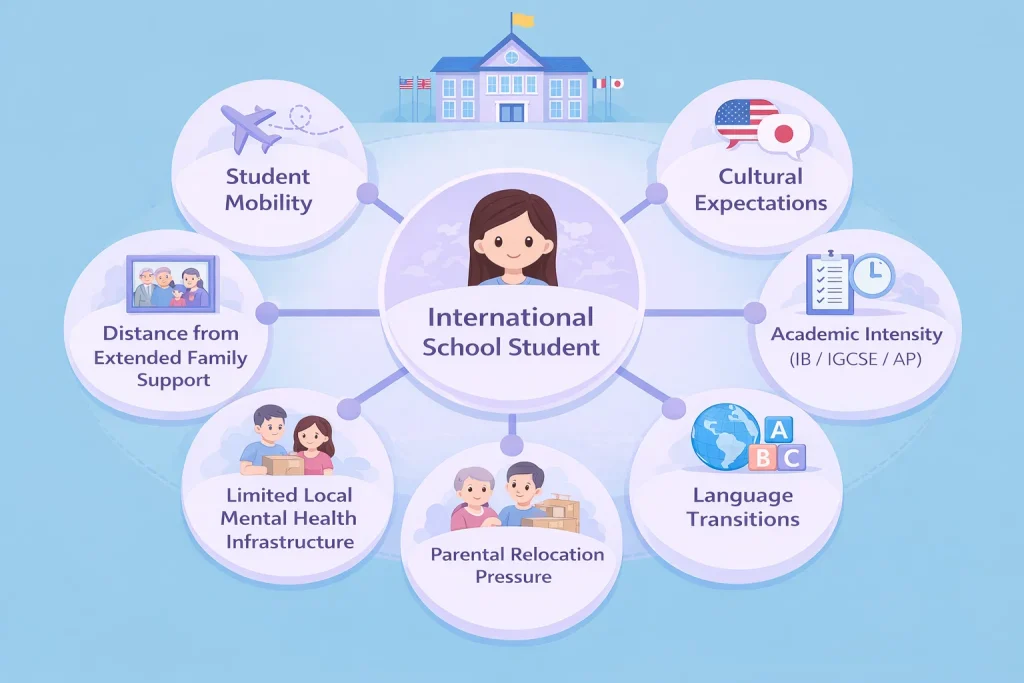
International schools often operate within unique risk conditions:
- High student mobility
- Diverse cultural expectations around mental health
- Academic intensity (IB, IGCSE, AP programmes)
- Language transition stress
- Parental relocation pressures
- Limited external child mental health infrastructure in host countries
- Diminished access to familial and communal supports in birth country
These factors create complexity that standard wellbeing programmes may not address.
Core Mental Health Challenges in International Schools
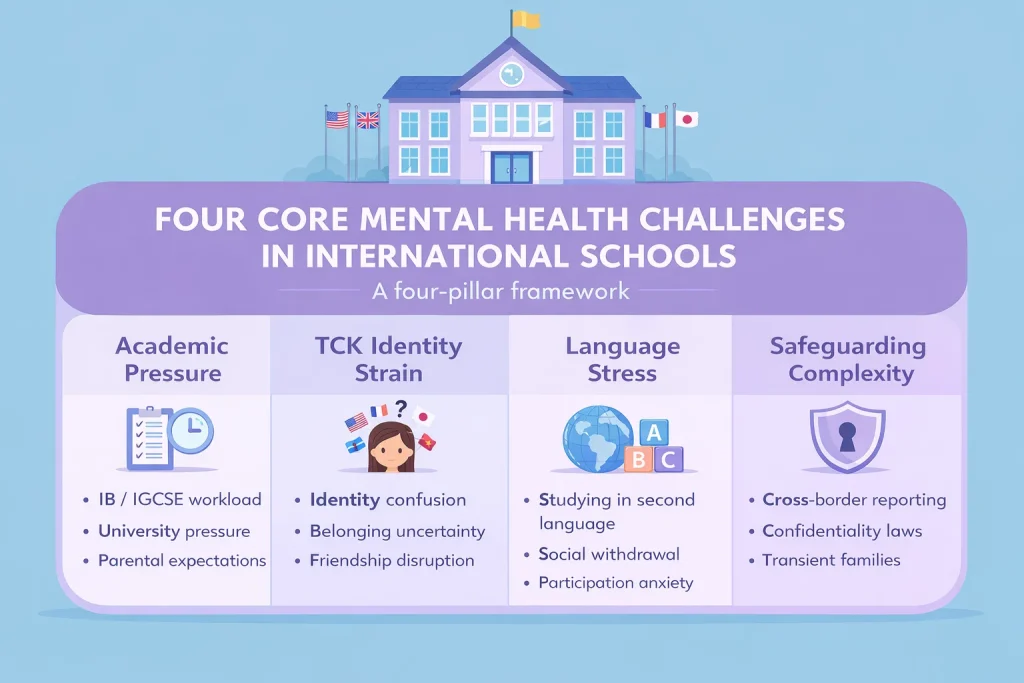
1️⃣ Academic Stress in International Curricula
Programmes such as IB and IGCSE carry high performance expectations. Students often face:
- Extended assessment cycles
- University admission pressure
- Competitive peer environments
- Parental expectation amplified by relocation investment
Academic stress may escalate into burnout or anxiety or burnout if not monitored carefully.
2️⃣ Third Culture Kid (TCK) Identity Strain
Students growing up between cultures often experience:
- Identity confusion
- Belonging uncertainty
- Repeated loss of friendships
- Cultural adaptation fatigue
These experiences may not present as overt distress but can influence emotional regulation and social integration.
3️⃣ Language Barriers and Social Anxiety
Students studying in a non-native language may experience:
- Academic underperformance despite capability
- Social withdrawal
- Fear of participation
- Heightened performance anxiety
Language-related stress is often misinterpreted as disengagement.
4️⃣ Safeguarding Complexity
International schools must manage:
- Cross-border safeguarding laws
- Transient families
- Confidentiality considerations
- Cultural differences in reporting
Clear referral pathways are essential.
Distinguishing Stress from Emerging Clinical Concerns
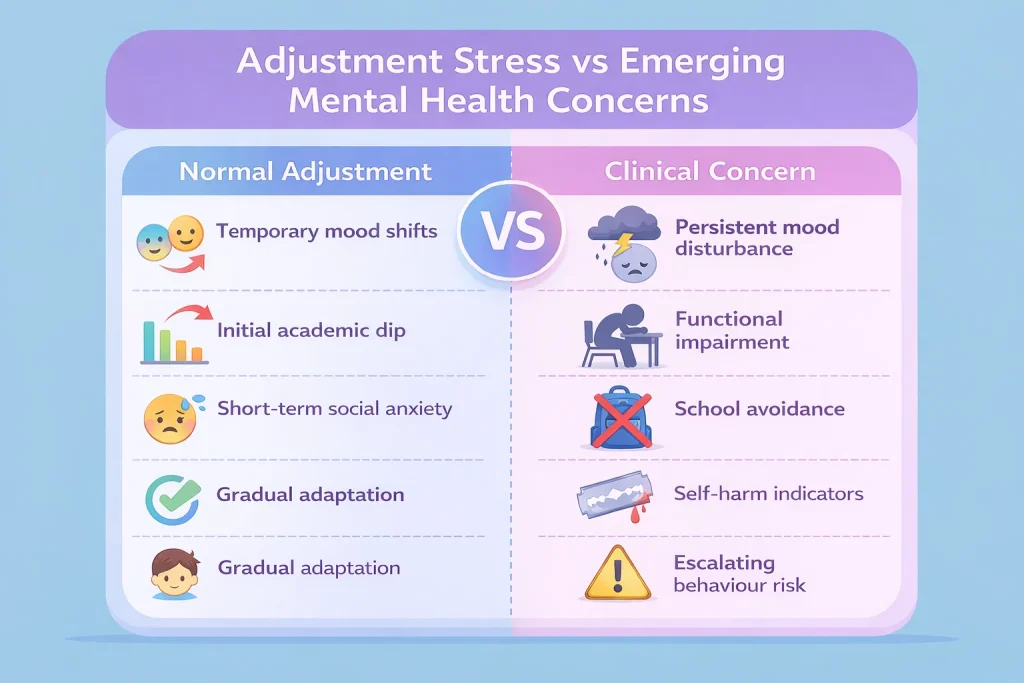
Not all distress signals disorder. However, institutional systems must differentiate between:
Adjustment Stress
- Temporary mood shifts
- Initial academic dip after transition
- Short-term social anxiety
and
Emerging Mental Health Concerns
- Persistent mood disturbance
- Functional impairment
- Self-harm indicators
- Escalating behavioural risk
- School avoidance
Clarity prevents both overreaction and dangerous delay.
What Effective Mental Health Support Looks Like in International Schools
1️⃣ Preventive Design
- Wellbeing embedded into curriculum
- Academic pacing review
- Transition support for new students
- Staff training in early signs
2️⃣ Clear Referral Pathways
- Defined escalation protocols
- Designated safeguarding leads
- Access to qualified and experience clinicians
- Parent communication procedures
3️⃣ Culturally Informed Practice
- Sensitivity to stigma differences
- Multilingual communication
- Cultural adaptation support
4️⃣ Integration With Academic Systems
Mental health support should align with:
- Assessment schedules
- Pastoral structures
- University counselling guidance
Mental Health Maturity Model for International Schools
Level | Pattern | Characteristics |
Reactive | Crisis-driven | Counselling after breakdown |
Developing | Fragmented | Workshops without structure |
Structured | Preventive | Clear safeguarding + referral |
Integrated | Systems-level | Mental health embedded in leadership & curriculum |
Implementation Roadmap for School Leaders
For schools seeking to strengthen mental health systems, a staged approach is often most sustainable.
Step 1: Systems Audit
Assess:
- Current referral clarity
- Staff confidence
- Academic pressure points
- Safeguarding documentation
Step 2: Leadership Alignment
Board and senior leadership should define:
- Wellbeing philosophy
- Escalation authority
- External partnership strategy
Step 3: Staff Training
Provide training on:
- TCK emotional patterns
- Academic anxiety indicators
- Language-related stress
- Safeguarding documentation
Step 4: Communication Framework
Ensure:
- Clear parent communication policies
- Confidentiality safeguards
- Transparent referral explanations
Step 5: External Clinical Partnership
Where internal capacity is insufficient, external clinicians should:
- Conduct assessments
- Support safeguarding cases
- Provide student therapy
- Offer consultative guidance
Mental health partnerships must be structured — not ad hoc.
In practice, effective collaboration requires clinicians who understand international curricula, mobility cycles, safeguarding governance, and cross-cultural family dynamics. CALM International works with international schools to provide clinically grounded assessments, student support, and consultative guidance aligned with institutional frameworks rather than generic external referrals.
Building Sustainable Mental Health Infrastructure
Mental health support in international schools is not a standalone initiative. It is an institutional capability.
Schools that invest in:
- Preventive design
- Staff awareness
- Defined referral pathways
- Clinically informed partnerships
- Governance-level accountability
…are better positioned to protect students while sustaining academic excellence.
When Schools Should Seek External Professional Support
Professional support may be necessary when:
- Risk behaviours escalate
- Internal capacity is exceeded
- Safeguarding cases require clinical assessment
- Complex cultural transitions affect students
Professional support should align with educational realities and safeguarding frameworks.
Conclusion
Mental health support in international schools is not optional. It is foundational to safeguarding, academic performance, and institutional stability.
Structured systems — not isolated initiatives — create sustainable wellbeing cultures.
International schools that approach mental health as an institutional capability rather than an ancillary service are better positioned to protect students, support staff, and navigate complexity responsibly.
CALM International partners with international schools to strengthen mental health systems through clinically informed assessment, safeguarding alignment, leadership consultation, and student support designed specifically for globally mobile communities. Learn more about our School Wellness services here.